
 , Industry
 , Nautical


SABIX 120
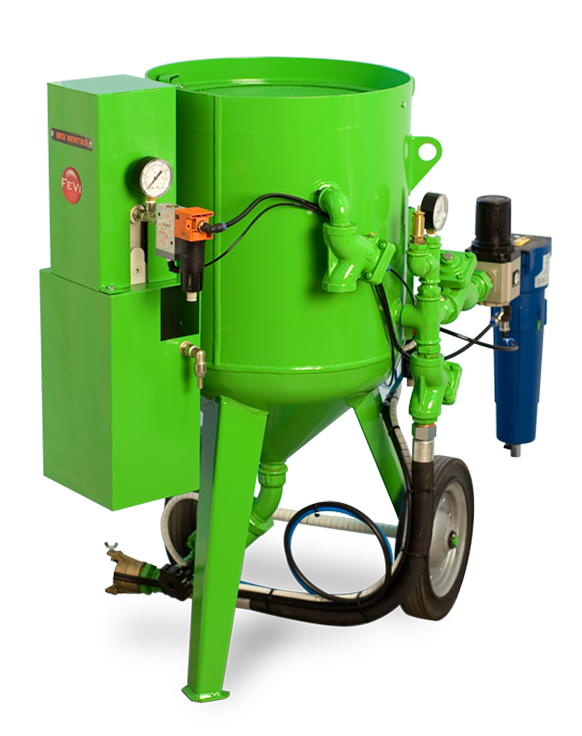
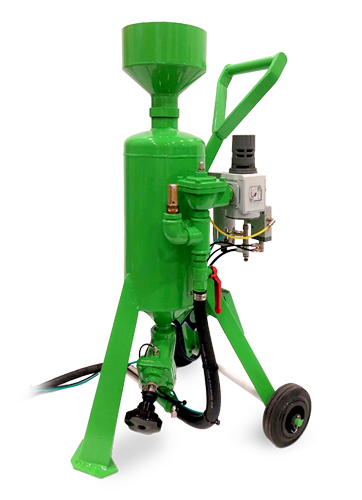
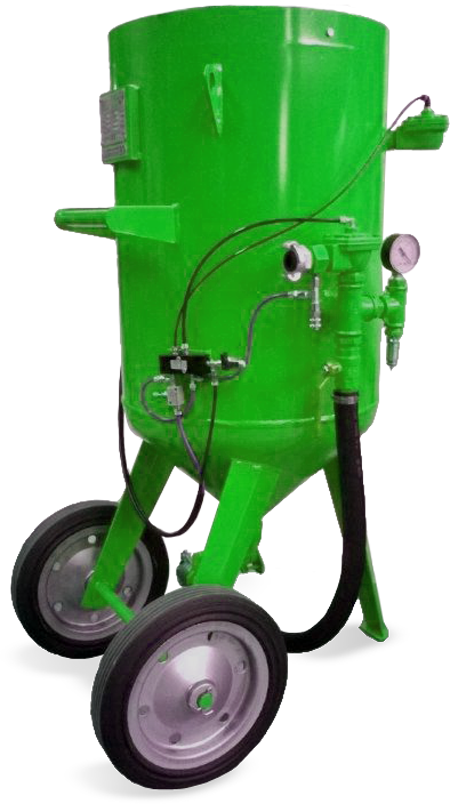
SABIX 120 is a free-blasting sandblaster with a 120-litre tank, designed for professional work on metal surfaces, industrial structures, construction elements, marine components and substrates that require the removal of rust, paint, oxidation, encrustations or old coatings.
Compared to models with lower capacity, SABIX 120 offers greater work continuity. This is important when the operator needs to treat large surfaces, complex structures or areas where interruptions for abrasive refilling affect the overall working time.
The wheeled structure makes it easier to move the machine around the working area, making it more practical in workshops, on job sites, in production facilities or outdoor areas. The pneumatic remote-control system allows the machine to be started and stopped from the working position, reducing the need to continuously return to the machine body.
SABIX 120 can be configured with double remote control or triple remote control. The version with double control allows automatic start and stop of the machine and, through a dedicated lever, enables intervention in the event of abrasive blockage. The version with triple control adds the opening and closing management of the abrasive mixing valve, offering more complete control of the workflow.
Applications of the SABIX 120 sandblaster
Industry and maintenance
In industrial applications, SABIX 120 can be used for sandblasting metal structures, metalwork, machinery, tanks, pipes, frames, oxidized supports and components to be prepared before painting or protective treatments.
The 120-litre tank is useful in prolonged operations, where a larger quantity of abrasive allows operating continuity to be maintained for longer.
Construction and job sites
In the construction sector, SABIX 120 is suitable for operations on concrete, stone, bricks, masonry, plaster, metal elements, mineral surfaces and structures to be restored.
It is suitable for work on external surfaces, façades, manufactured parts and structural elements where a machine with greater autonomy than more compact models is required.
Marine and shipyard applications
In the marine sector, SABIX 120 can be used to remove old paint, oxidation, residues and deteriorated coatings from metal components, structures, boat parts and substrates to be prepared before new protective cycles.
The tank autonomy and the possibility of remote control make the machine suitable for contexts where the operator needs to work on large surfaces or in positions that are not always close to the machine body.
Metal fabrication and metal structures
SABIX 120 is suitable for preparing metalwork, gates, railings, frames, beams, profiles, iron structures and metal components affected by rust or deteriorated coatings.
The 120-litre capacity allows longer jobs to be handled with fewer interruptions.
Surface preparation before painting
The machine can be used to prepare metal or mineral surfaces before painting, anti-corrosion treatments, protective coatings or restoration cycles.
The choice of abrasive, nozzle and pressure must be defined according to the material, the thickness of the substrate and the required finish level.
Advantages of SABIX 120
120-litre tank for greater autonomy
The 120-litre tank is the main distinguishing feature of SABIX 120. It allows longer work between refills, reducing downtime and improving productivity in prolonged operations.
Wheeled sandblaster
The wheeled structure makes the machine easier to move within the working area. This is useful in workshops, production facilities, job sites and environments where the sandblaster needs to be repositioned during operation.
Double pneumatic remote control
The double remote-control configuration allows the operator to automatically start and stop the machine from the working position.
In the event of blockage, a dedicated lever helps release the abrasive outlet, reducing operational interruptions.
Triple pneumatic remote control
The triple remote-control configuration offers more complete control: automatic start, stop, opening and closing of the abrasive mixing valve, and release manoeuvre in the event of blockage.
This solution is particularly useful when working at a distance from the machine body or in conditions where abrasive flow management needs to be more precise.
Suitable for medium- and long-distance operations
The current page highlights that SABIX 120 can be supplied with different setups that allow the operator to work at medium-to-long distance. This makes it suitable for job sites, industrial structures, marine applications and operations where the machine is not always positioned directly next to the area being treated.
Greater productivity in continuous work
The combination of 120-litre capacity, remote control and wheeled structure helps reduce pauses, manage work more effectively and maintain greater continuity in professional operations.
Main components of SABIX 120
120-litre tank
The 120-litre tank provides greater autonomy and makes the machine suitable for prolonged work, large surfaces and professional operations.
Wheeled structure
The structure on wheels makes it easier to move the sandblaster around the working area, improving ease of use in industrial environments, job sites and workshops.
Pneumatic remote control
The remote control allows the operator to control machine start and stop from the working position.
In the version with triple control, it is also possible to manage opening and closing of the abrasive mixing valve.
Abrasive mixing valve
The mixing valve regulates the passage of abrasive into the air flow. Correct adjustment helps optimize consumption, performance and jet continuity.
Anti-abrasive hose
The anti-abrasive hose connects the sandblaster to the working point. Length, diameter and wear condition directly affect system performance.
Sandblasting nozzle
The nozzle determines the concentration, speed and intensity of the jet. It must be selected according to the available compressor, the material to be treated and the required removal level.
Operator protection devices
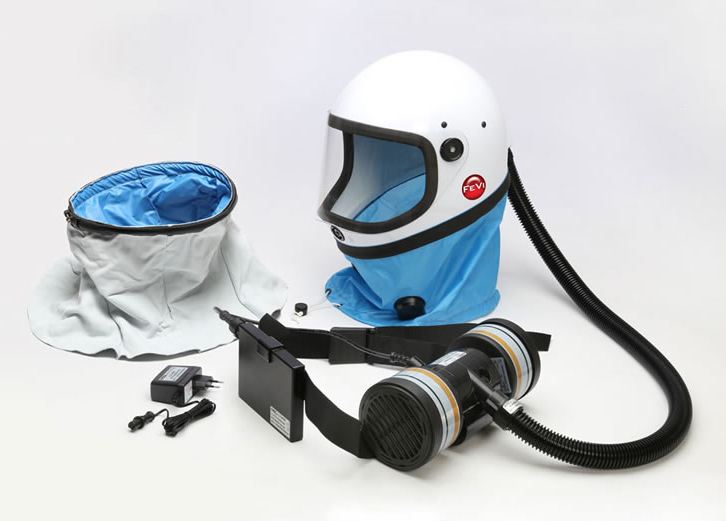
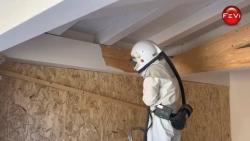
The current page associates SABIX 120 with the use of protective devices such as the PCS helmet, designed to protect the head, face, eyes, ears and respiratory tract during abrasive operations.
Available configurations
The SABIX 120 sandblaster can be supplied with different pneumatic remote-control configurations, to be selected according to the type of work, operating distance and required level of control.
Double remote control
It allows the operator to automatically start and stop the machine. In addition, thanks to a dedicated lever, it is possible to intervene in the event of blockage and help release the abrasive outlet.
Triple remote control
It allows the operator to start and automatically stop the machine, open and close the abrasive mixing valve and perform the related release manoeuvre in the event of blockage.
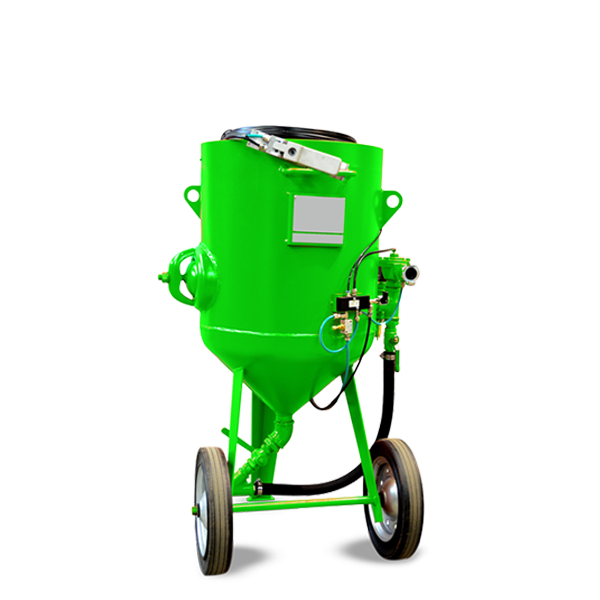
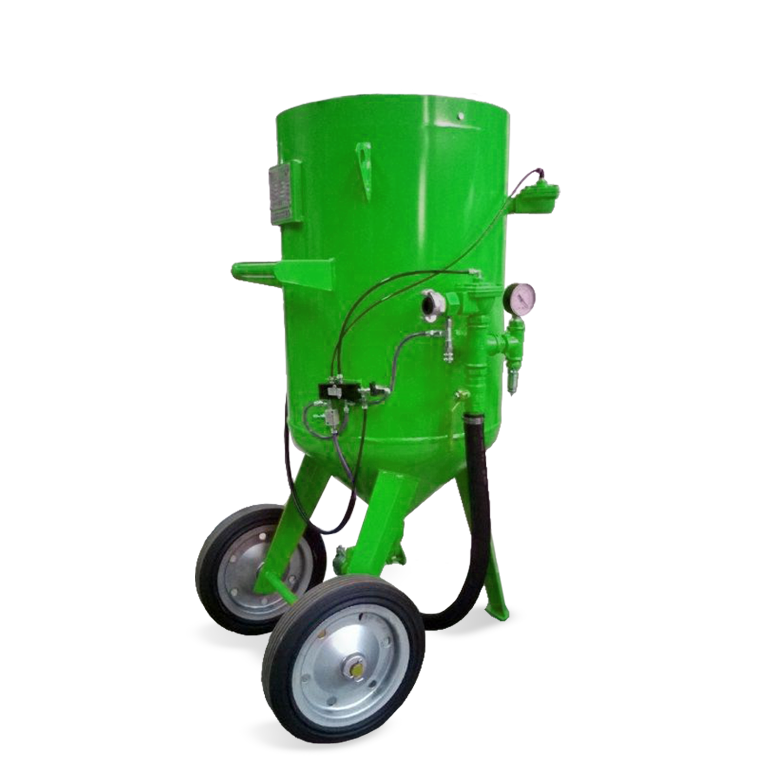
The version with 24-litre and 60-litre autonomy is also available on request.
When to choose SABIX 120
SABIX 120 is the right choice when:
-
• you need to sandblast medium-to-large surfaces;
-
• you want to reduce pauses for abrasive loading;
-
• you work in construction, industry, maintenance or marine applications;
-
• you need a professional wheeled sandblaster;
-
• you work at a distance from the machine body;
-
• you want to configure the machine with double or triple pneumatic control;
-
• you need to remove rust, paint, oxidation or old coatings;
-
• you need a machine suitable for continuous use.
-
Usage recommendations
To achieve good performance with SABIX 120, it is important to define before the operation:
-
• surface to be treated;
-
• material to be removed;
-
• most suitable abrasive;
-
• grain size;
-
• operating pressure;
-
• nozzle diameter;
-
• actual air flow rate of the compressor;
-
• hose length;
-
• working distance;
-
• need for double or triple control;
-
• operator protection devices;
-
• management of dust, spent abrasive and residues.
On metal and metalwork, the machine can be configured to remove rust and paint with more aggressive abrasives.
On stone, concrete, masonry or mineral surfaces, it is advisable to evaluate abrasive and pressure progressively, especially when the substrate requires care.
In prolonged work, it is important to periodically check the nozzle, hose, fittings, valves and control devices, because component wear can affect jet quality and sandblasting regularity.
SABIX 120 FAQ
Is SABIX 120 a free-blasting sandblaster?
Yes. SABIX 120 is a professional free-blasting sandblaster designed for operations with abrasive projected by compressed air.
What does SABIX 120 mean?
The number 120 indicates the tank capacity, equal to 120 litres. This autonomy allows longer work than machines with smaller tanks.
Which sectors is SABIX 120 suitable for?
SABIX 120 is suitable for construction, industry, maintenance, metal fabrication, workshops and marine applications. The current FEVI page associates it in particular with the construction, industry and marine fields of application.
What is the advantage of the 120-litre tank?
The 120-litre tank reduces interruptions for abrasive loading and improves continuity in prolonged work or on large surfaces.
Is SABIX 120 wheeled?
Yes. The machine is described as a wheeled sandblaster, designed to make movement within the working area easier.
What is the difference between double and triple remote control?
Double control allows automatic machine start and stop and release of the abrasive outlet in the event of blockage. Triple control adds management of the opening and closing of the abrasive mixing valve.
Is SABIX 120 suitable for working at a distance from the machine body?
Yes. The current page indicates that SABIX 120 can be supplied with different setups to allow the operator to work at medium-to-long distance.
Can it remove rust and paint?
Yes. SABIX 120 can be used to remove rust, paint, oxidation and deteriorated coatings by selecting abrasive, pressure and nozzle according to the material to be treated.
Is it suitable for marine applications?
Yes. It is also suitable for the marine sector, for example for operations on painted surfaces, metal components and parts subject to corrosion.
Which compressor is required for SABIX 120?
The compressor must be sized according to nozzle, pressure, abrasive, hose length and work continuity. For correct configuration, a FEVI technical check is recommended.
Is SABIX 120 suitable for occasional work?
It can also be used for non-continuous work, but its real advantage emerges in longer professional operations, where the 120-litre tank reduces operating pauses.
Is a protective helmet required?
Yes. During free-blasting sandblasting, suitable protective equipment must be used. The FEVI page presents the PCS helmet as an accessory linked to operator safety.