Safety helmet | FEVI
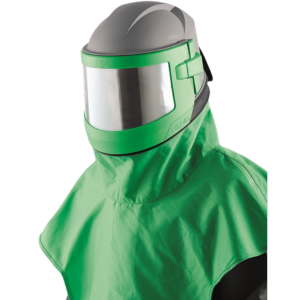
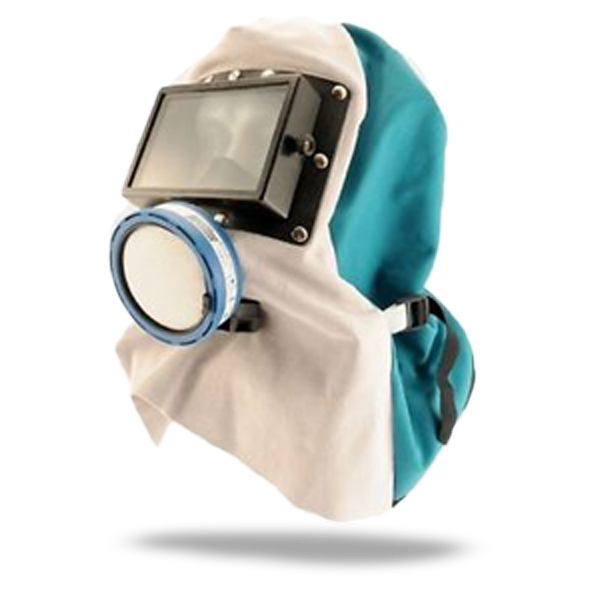
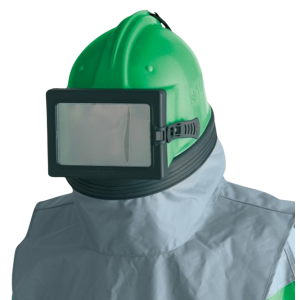
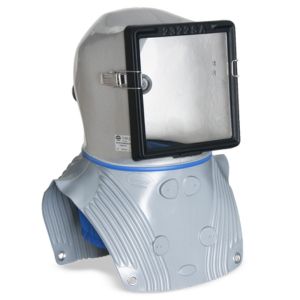
FEVI sandblasting helmets and respirators include supplied-air systems, powered air-purifying respirators (PAPR), and negative-pressure filter masks. Selecting the proper device requires evaluating the application, specific contaminants, workplace environment, and protection factor requirements, alongside visibility and ergonomics. Compare our range of technologies and accessories, ensuring certified configurations match your site risk assessment.
Read more
Supplied-Air, Powered Air-Purifying (PAPR), and Filter Masks
Supplied-air helmets receive breathable air from an external compressed air source. Powered air-purifying respirators (PAPR) utilize a battery-driven blower unit to draw ambient air through filters. Standard negative-pressure masks rely on the user's lung power. These represent fundamentally different protection mechanisms: the presence of a visor or airflow does not make devices interchangeable or suitable for identical exposure levels.
Air Quality for Supplied-Air Blasting Helmets
The compressed air supply line must deliver breathing air compliant with international standards, such as EN 12021 as referenced in the NOVA 3 manual. Verify the compressed air source, filtration, carbon monoxide monitoring, supply hoses, and flow control devices. Supply pressures and hose lengths must strictly follow manufacturer specifications. For NOVA 3, CO monitoring is required by the manufacturer: inline filters alone do not remove carbon monoxide gas.
Visibility and Ergonomics During Operation
Compare field of view, weight distribution, harness adjustment, and lens replacement systems. Tear-off lens systems and durable outer visors maintain clear sightlines during heavy blasting. Consider integration with capes, protective suits, and hearing protection. Fit-testing is essential: for tight-fitting facepieces, achieving a proper facial seal is critical to user safety.
PPE Technical Documentation and Maintenance
Review user manuals, safety markings, and Declarations of Conformity for your specific equipment. Certification covers complete assembled systems using manufacturer-approved components. Inspect visors, seals, breathing tubes, and couplings prior to every use; for battery-powered units, verify charge levels, airflow rates, and safety alarms. Schedule routine cleaning and filter replacement in accordance with manufacturer guidelines.
FEVI Respiratory Protection Technology Overview
The comparison below outlines system operations. Specific suitability must be verified against technical datasheets and job-site risk assessments.
| Model | Technology Type | Key Comparative Features |
|---|---|---|
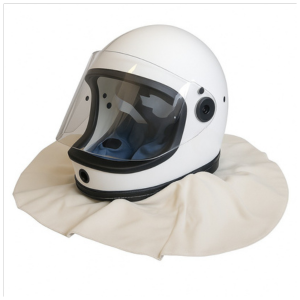
| ASTRO | Supplied-Air Helmet | Lightweight design, flat lens system, and tear-off visor protection. |
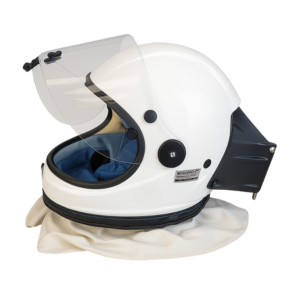
| NOVA 3 | Supplied-Air Helmet | Adjustable internal padding, high-impact shell, and advanced visor system. |
| AIRSAF 1 | Supplied-Air Helmet | Shoulder-supported cape design with low-flow warning indicators. |
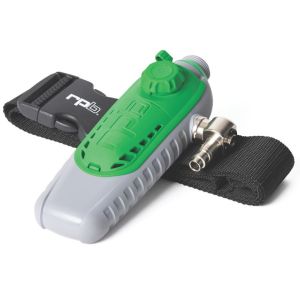
| PCS | Belt-Mounted PAPR | Waist-mounted battery/blower unit; filter options per application. |
| PCS-KAIO | Helmet-Integrated PAPR | Fully integrated blower and battery inside helmet; standard P3 particulate filter. |
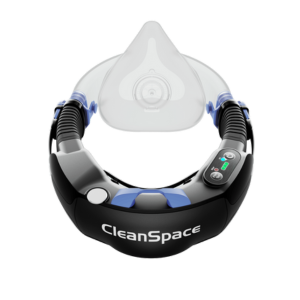
| CLEANSPACE | Power-Assisted Respirator | HALO WORK system with tight-fitting mask and high-efficiency particulate filters. |
| RC4 | Negative-Pressure Hood | Protective hood, replaceable screen, and dual particulate filters. |
| ELIPSE Full Face | Full-Face Filter Mask | Compact full-face mask configuration with replaceable ABEK1P3 combination filters. |
Air Filtration and Thermal Climate Control
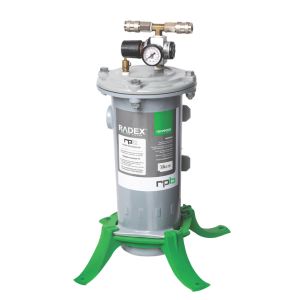
The RADEX inline airline filter cleans compressed air for breathing applications. As specified by the manufacturer, RADEX does not remove carbon monoxide (CO); air quality testing and monitoring must be arranged based on the compressor source.
The C40 Climate Control Device regulates air temperature (cooling or heating) inside compatible helmets. Hose lengths, operating pressures, and system compatibility must be verified for the complete assembly.
Frequently Asked Questions About Sandblasting Helmets
Can a filter mask replace a supplied-air sandblasting helmet?
Substitution requires careful engineering evaluation. Contaminant types, airborne concentrations, abrasive rebound impact, and site conditions dictate the required assigned protection factor (APF). Always verify certified device limits against your safety officer's risk assessment.
What is the difference between a PAPR helmet and a supplied-air helmet?
A PAPR helmet filters surrounding ambient air using a battery-powered blower unit. A supplied-air helmet receives Grade D breathing air from an external compressor source via supply lines. Air-purifying devices do not supply oxygen and must never be used in oxygen-deficient atmospheres.
Does a P3 particulate filter protect against gases and vapors?
No. P3 rates particulate filtration efficiency only. Protection against specific gases and vapors requires approved chemical cartridges (e.g., ABEK rating). Combination filters must be selected based on a detailed substance hazard analysis.
What parameters are needed to configure a supplied-air breathing system?
You need the helmet model, climate control regulator type, hose diameter, hose length, couplings, and number of simultaneous operators. Compressor air output, filtration capacity, and continuous CO monitoring must be verified for the complete setup.
Select the Right Respirator for Your Operation
Share details with FEVI regarding your blasting process, substrate materials, coating hazards, work environment, and shift durations. Mention available compressed air lines or power sources to help our technical team configure the correct helmet, filtration system, and replacement parts.
REQUEST PPE EVALUATION ASSISTANCE BROWSE HELMETS ON FEVI STORE